

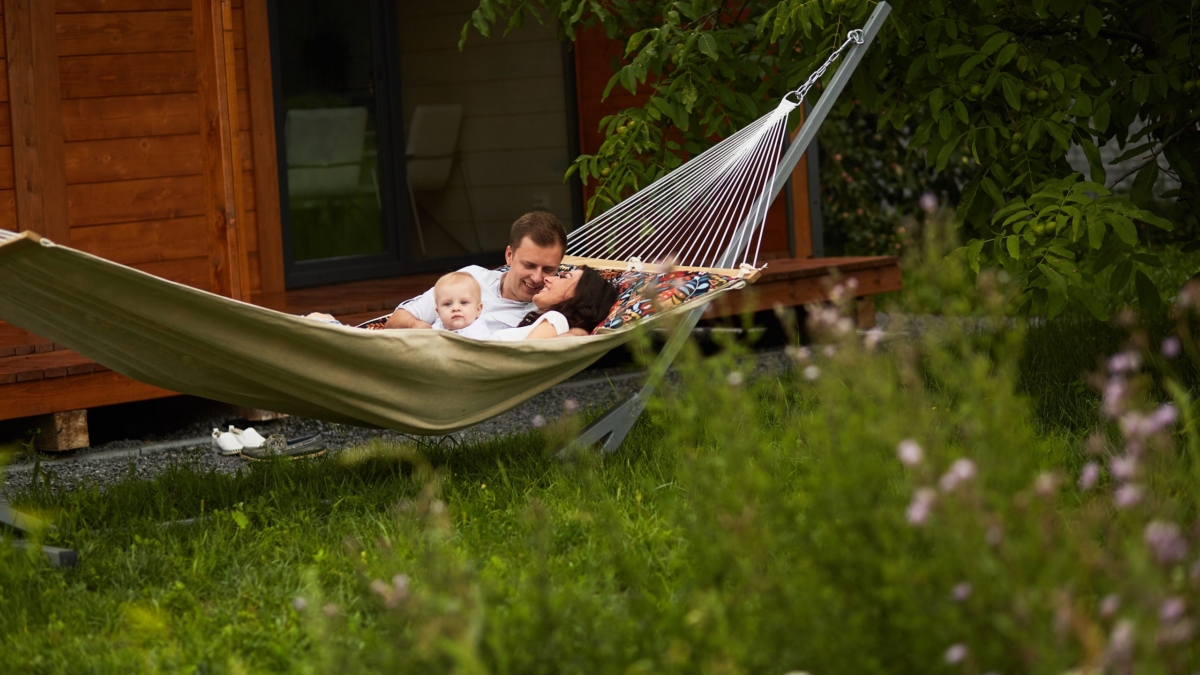
Outdoor living can include much more than dining and gardening. A well-planned garden can provide areas for reading, exercising, playing, socializing, resting, or simply spending time outside.
The challenge is to accommodate different activities without making the space feel divided into disconnected sections.
Designing for Multiple Activities
A garden can contain several functional areas without requiring permanent boundaries between them. A large open surface may accommodate exercise, games, or gatherings, while a smaller corner can provide a quieter setting.
Flexible spaces are particularly useful when the same area needs to support different activities throughout the week.
Movable furniture can help change the layout quickly. Chairs can be grouped for conversation, moved aside for open space, or positioned according to sunlight and shade.
Creating a Comfortable Relaxation Area
Relaxation areas should be positioned according to environmental conditions. Shade, wind direction, surrounding noise, and views can influence whether a location feels comfortable.
Seating should support the intended activity. A chair designed for short conversations may not be appropriate for extended reading or reclining.
Small details can make a major difference. A nearby table provides space for personal items, while appropriate lighting extends usability into the evening.
Including Recreation Zones
Open areas can support physical activities without requiring specialized construction. The appropriate layout depends on the activities expected to take place there.
Clear boundaries can help separate active areas from seating or dining zones. These boundaries do not necessarily need to be solid; changes in surface, low planting, or furniture placement can provide sufficient distinction.
Safety should also be considered. Activity areas need adequate clearance and should not conflict with pathways, cooking equipment, or fragile features.
Making Spaces Social
Outdoor living often involves interaction. Seating arrangements should allow people to face one another comfortably rather than forcing everyone to look in the same direction.
Different seating heights can create visual variety, while a central table or open area can provide a shared focus.
For larger gatherings, flexible arrangements are useful because people naturally move between conversations and activities.
Maintaining a Sense of Openness
Multiple functions should not result in excessive visual clutter. A consistent material palette and repeated design elements can connect different zones.
Storage is especially important. Recreation equipment, cushions, gardening tools, and outdoor accessories can quickly overwhelm an otherwise organized space.
A successful recreational garden provides opportunities for activity and relaxation while maintaining enough open space to feel comfortable. The result is an outdoor environment that adapts to changing routines rather than being dedicated to one purpose.