

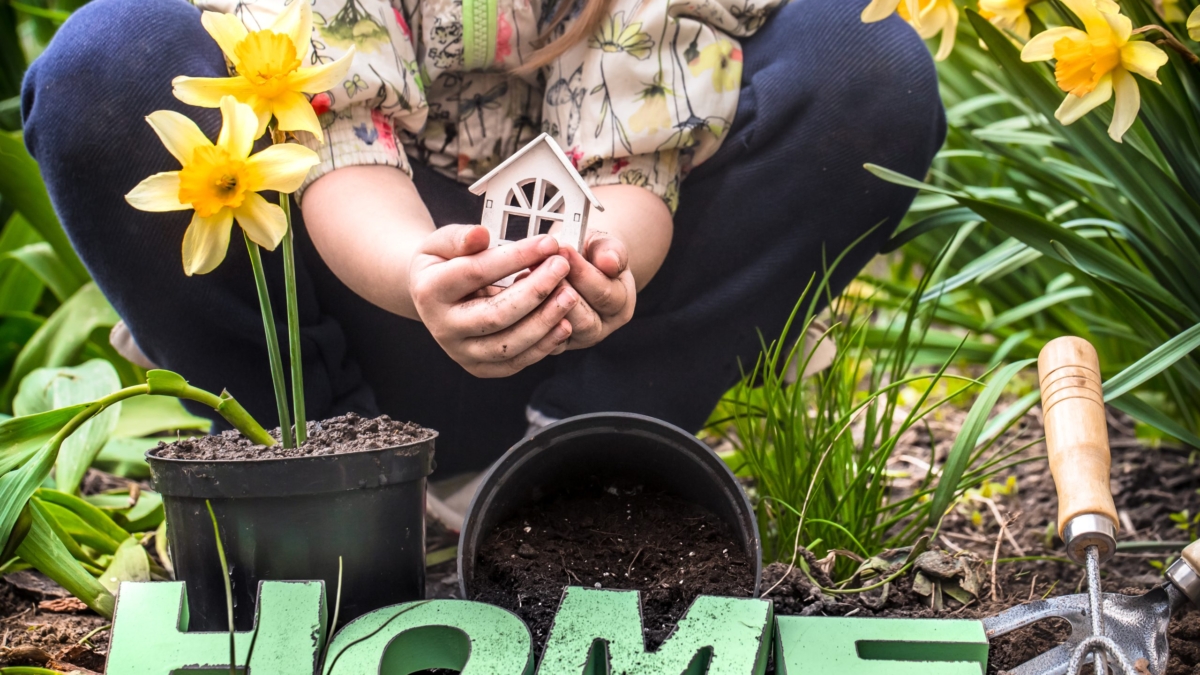
A well-designed garden can become a natural extension of the living space rather than a separate area beyond the walls of a house. The relationship between indoor rooms and outdoor areas influences how easily people move between them, how the garden is used throughout the day, and how visually connected the two environments feel. Thoughtful garden design begins by considering this relationship as a whole.
One of the simplest ways to create continuity is to repeat materials, colors, shapes, or textures found indoors. For example, a material used around an entrance or interior floor can inspire the choice of outdoor paving. Similar tones can also be introduced through containers, furniture, planting, or decorative elements. The goal is not to make every part identical, but to establish visual connections.
Designing Around Movement
Movement is an important part of outdoor planning. Paths should lead naturally toward useful or attractive destinations such as a seating area, planting bed, dining space, or shaded corner. A garden can feel confusing when paths end without purpose or force people to take unnecessarily complicated routes.
Different surfaces can also communicate function. Firm paving may define a dining or gathering area, while stepping stones can create a softer route through planting. Curved paths can introduce a sense of discovery, whereas straight lines often create a more structured appearance.
Transitions between indoor and outdoor areas deserve particular attention. A wide doorway, terrace, steps, or covered threshold can act as an intermediate zone. These spaces make the transition between the home and garden feel gradual instead of abrupt.
Creating Functional Outdoor Rooms
Outdoor spaces can be organized in a similar way to interior rooms. A garden may include a dining zone, a quiet reading area, a place for gardening activities, and an open section for movement or recreation.
Each area benefits from a clear purpose. Furniture placement, planting, paving, and lighting can help define individual zones without requiring walls. A group of shrubs may create a visual boundary, while a change in paving can distinguish one activity from another.
The size of each outdoor room should correspond to its intended use. A dining area needs enough space for chairs to move comfortably, while a small seating corner may require very little ground area.
Using Planting to Connect Spaces
Plants can reinforce the relationship between architecture and garden. Repeating selected plant forms around doors, pathways, or terraces creates rhythm and helps guide the eye.
Plant height is also useful. Lower planting can preserve views, while taller vegetation can frame windows or create privacy. Trees and larger shrubs can establish a sense of enclosure, but they should be positioned carefully to avoid making smaller spaces feel crowded.
Seasonal changes should also be considered. A garden may look very different in spring, summer, autumn, and winter. Combining plants with different periods of visual interest helps maintain structure throughout the year.
Balancing Comfort and Appearance
A beautiful garden is more useful when it is comfortable. Seating should be positioned according to sunlight, shade, wind exposure, and surrounding views. A visually attractive location may not become a favorite sitting area if it receives excessive heat or lacks protection from weather.
Outdoor furniture should also relate to the scale of the space. Oversized pieces can overwhelm compact gardens, while very small furniture may look disconnected in a large setting.
Ultimately, the strongest garden designs do not treat outdoor areas as decoration alone. They combine planting, circulation, architecture, materials, and everyday activities into one coherent environment. When these elements support one another, the garden becomes a natural part of daily life.