

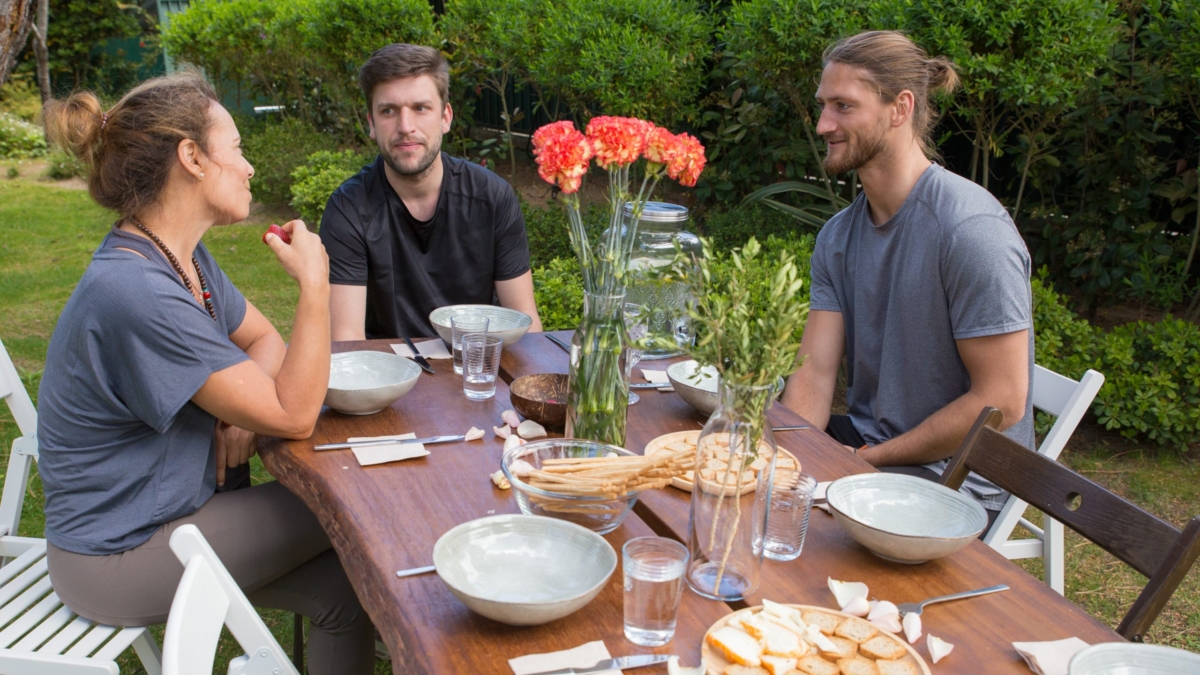
Outdoor dining can transform a garden or patio into a natural gathering place. A successful dining environment needs more than a table and chairs; the surrounding layout should support preparation, serving, movement, and conversation.
The most effective designs consider the entire dining experience from the moment food leaves the kitchen until the final dishes are cleared.
Positioning the Dining Area
Location has a major influence on convenience. A dining area positioned relatively close to the home can make serving easier, while a more distant location may create a stronger sense of separation.
The surrounding environment should also be considered. Views, shade, wind exposure, nearby activity, and evening lighting can all affect comfort.
The dining table should not sit directly in a major circulation path. People moving through the garden should be able to pass without interrupting those who are eating.
Selecting the Table and Seating
The size of the table should correspond to the number of people who will normally use it rather than occasional maximum capacity.
Chairs require sufficient clearance around them. A table may technically fit within a patio while still feeling cramped if there is not enough space for people to pull chairs out and move behind seated guests.
Different seating styles can also influence the character of the space. Individual chairs provide flexibility, while benches or built-in seating can make better use of certain layouts.
Creating a Connection With Food Preparation
When outdoor cooking is part of the design, the relationship between cooking and dining areas becomes especially important.
An outdoor kitchen, grill station, preparation counter, or serving surface can be positioned so that the person preparing food remains connected to the gathering.
Storage should be considered as well. Frequently used outdoor dining and cooking accessories are easier to manage when they have dedicated storage nearby.
Making Evening Dining Comfortable
Lighting should provide enough visibility for dining without creating harsh glare. Table lighting, nearby wall fixtures, overhead illumination, or subtle surrounding lights can each serve different purposes.
Temperature can also influence evening comfort. Depending on the environment, sheltered areas or appropriate outdoor heating solutions may allow people to remain outside longer.
The goal is to create an environment where practical needs and atmosphere work together.
Designing for Different Gatherings
An outdoor dining area may host a quiet meal one day and a larger gathering another day. Flexible furniture can make this transition easier.
Additional chairs can be stored nearby and introduced when needed. Side tables can provide temporary serving surfaces, while movable furniture can create more open space when dining is not taking place.
Good outdoor dining design supports social interaction without making the space feel overly formal. Comfortable proportions, convenient access, and thoughtful placement can make the dining area a natural extension of everyday living.